
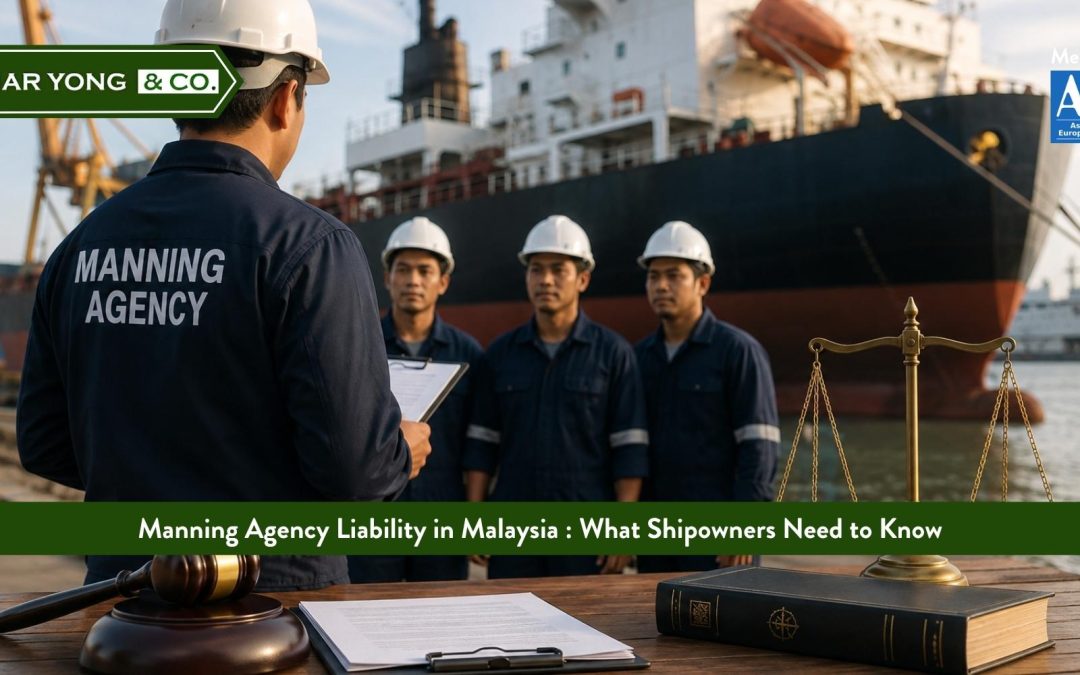
Malaysia is one of Southeast Asia’s most active seafarer supply markets, with thousands of licensed manning agencies operating under the oversight of the Marine Department of Malaysia (Jabatan Laut) and the Department of Labour. Manning agencies — also known as crew recruitment agencies or ship manning agents — act as intermediaries between shipowners seeking crew and seafarers seeking employment. Under the MLC 2006, which Malaysia ratified in 2013, manning agencies operating in Malaysia are subject to a comprehensive regulatory framework that creates direct obligations and — critically — direct liability.
Under Regulation 1.4 of the MLC 2006, each member state must ensure that manning agencies operating within its jurisdiction provide seafarers with access to a well-defined and documented system for managing all aspects of their recruitment and placement, including a system to ensure that the manning agency is financially capable of meeting its obligations. In Malaysia, manning agencies must be licensed by the Marine Department and comply with the Malaysian Guidelines on Manning Agents and Seafarer Recruitment.
The critical liability question arises when a shipowner defaults — failing to pay wages, refusing repatriation, or abandoning the vessel — and the seafarer turns to the manning agency for redress. Standard manning agency contracts often attempt to limit the agency’s liability to recruitment services only, disclaiming responsibility for the shipowner’s performance of the employment contract. However, the MLC 2006 is clear: where the shipowner fails to fulfil its obligations, the manning agency bears joint and several liability for outstanding wages and other monies owed to the seafarer under the Seafarer’s Employment Agreement — at least to the extent of four months’ wages.
For shipowners, the manning agency is a contractual partner and a compliance gateway. A manning agency that supplies substandard or under-qualified crew, fails to conduct proper medical and competency checks, or places seafarers without valid certificates creates exposure for the shipowner through PSC detentions, insurance invalidation, and civil liability for casualties caused by incompetent crew.
Key Legal Issues in Malaysian Manning Agency Relationships
-
MLC 2006 joint liability: Where a shipowner defaults on wages or repatriation, the manning agency bears joint liability for up to four months of outstanding wages under the MLC 2006 framework.
-
Licensing requirements: Manning agencies must hold a valid Marine Department licence. Operating without a licence is a criminal offence, and unlicensed agencies provide seafarers with no regulatory protection.
-
Certificate verification: The manning agency has a duty to verify that all certificates and documents provided by seafarers are genuine. A failure to detect forged certificates that contributes to a marine casualty may give rise to negligence liability.
-
Seafarer’s Employment Agreement: The SEA must comply with MLC 2006 minimum terms, be in a language understood by the seafarer, and be signed before embarkation. A defective SEA can affect both the agency’s and the shipowner’s legal position.
-
No fees to seafarers: Manning agencies in Malaysia are prohibited from charging seafarers recruitment fees. Any agency that charges seafarers for placement is in breach of MLC requirements and Malaysian law.
Frequently Asked Questions: Manning Agency Liability in Malaysia
Q: Can I sue the Malaysian manning agency if the shipowner has not paid my wages?
A: Yes — under the MLC 2006 as ratified by Malaysia, if the shipowner fails to pay wages or meet other financial obligations owed to seafarers, the manning agency that placed the seafarer bears joint and several liability for the outstanding obligations, including wages and other entitlements under the Seafarer’s Employment Agreement. This joint liability typically extends to a maximum of four months of outstanding wages. To pursue the manning agency, the seafarer should: make a written formal demand to the manning agency; lodge a complaint with the Marine Department of Malaysia (which has enforcement powers over licensed manning agencies under MLC); and if necessary, file a claim in the civil courts or pursue the manning agency through the Labour Department’s dispute resolution process. A maritime lawyer can advise on the most effective enforcement route depending on the specific facts and the amounts involved.
Q: The manning agency told me the job had specific terms — but the actual SEA was different. What can I do?
A: Misrepresentation of the terms of employment — including the wage rate, trading area, vessel type, or duration — is a serious breach of both the MLC 2006 and Malaysian consumer protection principles. Under the MLC 2006, the manning agency has a specific obligation to ensure that seafarers fully understand the terms of their SEA before signing, and that the SEA accurately reflects the agreed terms. Where the actual SEA differs materially from what was represented, the seafarer may have grounds to: treat the SEA as entered into under misrepresentation and seek to set it aside; claim damages from the manning agency for the loss of the bargain they were induced to accept; and file a formal complaint with the Marine Department of Malaysia, which can take enforcement action against the manning agency including suspension or cancellation of its licence. Always ask for a copy of the SEA before signing, and take time to read and understand it.
Q: My shipowner used a Malaysian manning agency to supply crew, and a crew member caused a collision through negligence. Is the agency liable?
A: The manning agency’s potential liability in a crew negligence scenario depends on whether the agency’s own conduct contributed to the casualty. Where the agency supplied a crew member whose certificates were forged or whose qualifications were inadequate — and the agency either knew or should have discovered this through proper verification — the agency may be liable in negligence to the shipowner (for the damage caused by the unqualified crew member) and potentially to third parties affected by the collision. However, the primary liability for a collision caused by crew negligence rests with the shipowner — the employer of the crew. The manning agency’s liability is secondary and depends on establishing a causal link between the agency’s failure of due diligence and the casualty. This is a demanding test, but one that becomes relevant where the crew member’s lack of competence is a significant factor in the cause of the incident.
Q: How do I verify that a Malaysian manning agency is properly licensed?
A: Licensed manning agencies in Malaysia are registered with and licensed by the Marine Department of Malaysia (Jabatan Laut). The Marine Department maintains a register of licensed manning agencies, which is accessible to seafarers seeking to verify an agency’s credentials. Before engaging a manning agency — whether as a seafarer or as a shipowner — you should: confirm that the agency holds a valid Marine Department licence; check that the licence covers the type of crew supply you require (deck officers, engine officers, ratings, etc.); verify the agency’s physical address and contact details are consistent with the registered information; be cautious of agencies that request payment from seafarers for placement (this is prohibited); and — for shipowners — conduct due diligence on the agency’s reputation, insurance arrangements, and MLC compliance procedures. A licensed and reputable manning agency will readily provide evidence of its credentials. If you have doubts, a maritime lawyer or the Marine Department can assist with verification.
Q: What happens if a manning agency operates in Malaysia without a licence?
A: Operating a manning agency in Malaysia without a valid Marine Department licence is a criminal offence under the MSO 1952 and the applicable regulations made under it. An unlicensed agency and its principals can face criminal prosecution, substantial fines, and — where the illegal operation causes harm to seafarers — imprisonment. For seafarers placed by an unlicensed agency, the practical consequences are severe: they have no regulatory protection, no recourse to the Marine Department’s enforcement mechanisms, and no access to the MLC 2006’s joint liability provisions. They may also find that their placement contract is unenforceable as an illegal contract. For shipowners engaging crew through an unlicensed agency, there is a risk that the crew’s contracts of employment are deficient, that PSC officers will identify MLC non-compliance, and that the shipowner’s insurance coverage may be affected. Always verify licensing status before engaging any manning agency.
About the Author: Mr. Yong Chee Kong

Yong Chee Kong is an experienced Advocate & Solicitor with over three decades of legal experience, with principal areas of practice in Corporate Law and Shipping & Maritime Law. Called to the Bar in 1995, he has advised shipping companies, developers, financial institutions, and corporate entities on complex legal matters, including shipping disputes, development projects, project financing, mergers, takeovers, and acquisitions.
As a seasoned litigation lawyer, Yong Chee Kong regularly appears before the High Court, Court of Appeal, and Federal Court of Malaysia. His broad experience also extends to Banking, Finance, and Construction Law, enabling him to advise clients across a range of complex commercial and corporate matters.
Beyond legal practice, he is a registered Patent, Trade Marks and Industrial Design agent, as well as a Commissioner for Oaths and Notary Public. He has also served as a member of the Bar Council Disciplinary Committee and chaired numerous disciplinary investigations involving members of the Malaysian Bar.
His academic and professional qualifications include an LL.B (Hons) from the University of London, a Certificate in Legal Practice from University Malaya, and successful completion of the Patent Agent Examination conducted by the Intellectual Property Corporation of Malaysia.
-
Expertise: Corporate Law, Shipping & Maritime Law, Banking & Finance, Construction Law, Commercial Litigation, Intellectual Property
-
Professional Experience: 30+ years
-
Called to the Bar: High Court of Malaya, 1995
-
Professional Roles: Patent, Trade Marks & Industrial Design Agent; Commissioner for Oaths; Notary Public
Maritime Arbitration vs Court Litigation in Malaysia: Which Route Is Right for Your Dispute?
Most maritime disputes in Malaysia are resolved through one of two routes: arbitration or litigation before the Admiralty Court. The route that applies to your dispute is largely determined by what your contract says — and understanding the difference before a dispute...
Bunker Disputes in Malaysia: What to Do When Fuel Quality or Quantity Is Disputed
Malaysia is a significant bunkering market, with licensed suppliers operating across 19 ports, including Port Klang, Port of Tanjung Pelepas, Pasir Gudang, Penang, and Labuan. Vessels transiting the Strait of Malacca regularly bunker in Malaysian waters, and where...
Ship Collision Claims in Malaysia: Who Is Liable and How Do You Claim?
Malaysia's position along the Strait of Malacca — one of the world's busiest and most congested shipping lanes — means that ship collisions are a real and recurring risk. When two vessels collide, the legal consequences are immediate and potentially enormous: hull...
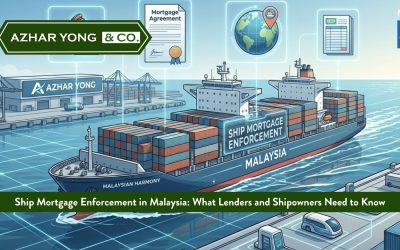
Ship Mortgage Enforcement in Malaysia: What Lenders and Shipowners Need to Know
A ship mortgage is a security interest granted by a shipowner over a vessel in favour of a lender as collateral for a loan or financing facility. It functions similarly to a property mortgage — the shipowner retains possession and continues operating the vessel....
What Is a Charterparty and What Happens When It Is Breached?
A charterparty is a written contract between a shipowner and a charterer for the use of a vessel. It is the governing document for the commercial relationship: it sets out the hire rate or freight payable, the duration or voyage to be performed, the obligations of...
Charterparty Disputes in Malaysia: A Complete Guide for Shipowners and Charterers
A charterparty is one of the most commercially significant contracts in the shipping industry. When disputes arise under it — over unpaid freight, demurrage, off-hire, or vessel performance — the financial consequences can be enormous. This guide explains how...