
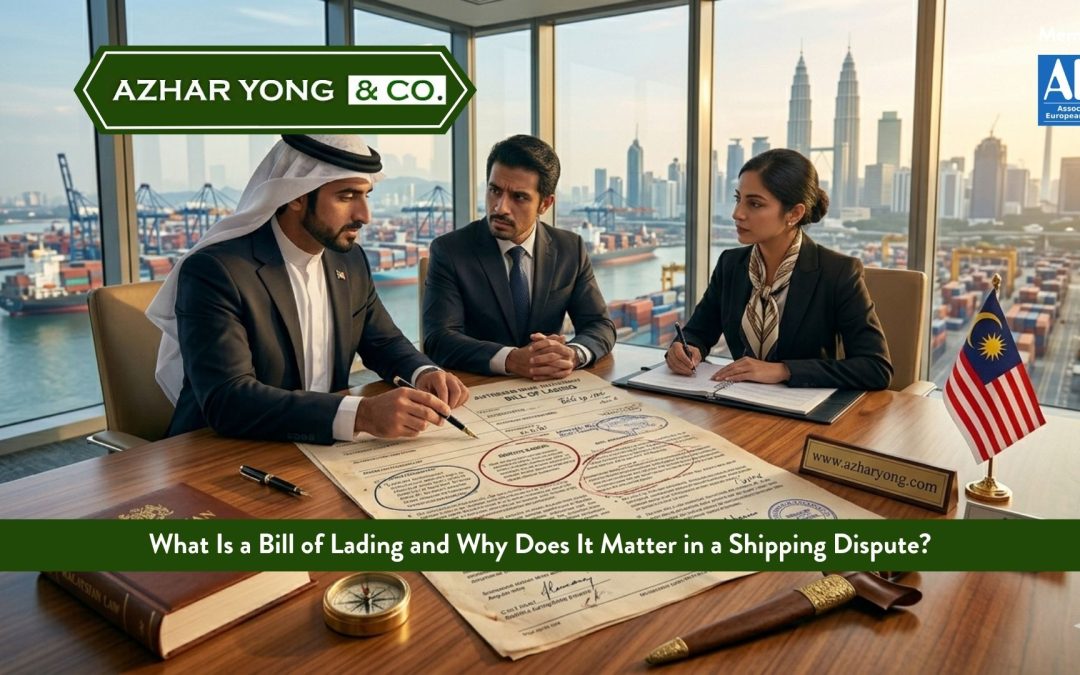
In the world of international trade, the bill of lading (B/L) is the most critical document a trader will ever handle. Whether you are importing electronics through Port Klang or exporting palm oil from Penang, the bill of lading Malaysia practitioners rely on serves three indispensable legal functions: it is a formal receipt of goods, a contract of carriage, and a document of title.
Why the Bill of Lading is the “Smoking Gun” in Disputes
Most shipping document Malaysia conflicts hinge on the condition of the cargo at the time of loading. When a carrier issues a “Clean” B/L, they officially acknowledge that the goods were received in apparent good order. If the cargo arrives damaged, the B/L becomes the primary evidence used to shift the burden of proof onto the shipping line. Without a properly endorsed bill of lading Malaysia courts cannot easily determine where the liability lies between the shipper, the carrier, and the consignee.
Common Causes of a Bill of Lading Dispute
A bill of lading dispute typically arises from one of the following scenarios:
-
Misdescription of Cargo: Discrepancies between the actual weight or type of goods and what is stated on the document.
-
Release Without Original B/L: A carrier releasing goods to a party who does not hold the original document, leading to claims of conversion.
-
Switch Bills of Lading: Risks associated with issuing a second set of documents to edit the port of origin or destination for commercial reasons.
Why Choose Azhar Yong & Co?
Navigating a bill of lading dispute requires more than just a reading of the law; it requires a technical understanding of how cargo is tallied and stowed. At Azhar Yong & Co, our team features a Master Mariner who has overseen the signing of thousands of bills of lading from the bridge of a ship. This “on-deck” experience allows us to identify fraudulent entries or technical errors in any shipping document that Malaysian providers issue, ensuring your cargo rights are protected with maritime precision.
Frequently Asked Questions (FAQ)
1. What are the three main functions of a bill of lading in Malaysia?
The B/L acts as a receipt for the goods, evidence of the contract of carriage, and a document of title that allows the holder to claim the cargo.
2. How do I resolve a bill of lading dispute regarding damaged goods?
You must compare the “Clean” status on the B/L with the “claused” notes on the delivery receipt. A maritime lawyer can then use this to establish carrier liability under COGSA.
3. Is an electronic bill of lading in Malaysia legally recognised?
Yes, provided it meets the requirements of the Electronic Trade Documents legislation and the specific terms agreed upon in the contract of carriage.
4. What happens if a carrier releases cargo without the original bill of lading in Malaysia?
This is a serious breach of contract. The rightful owner can sue the carrier for the full value of the goods, as the B/L is the only document that proves the delivery right.
5. Why is the “Master Mariner” edge important in a shipping document Malaysia case?
A Master Mariner understands the “apparent good order and condition” clause from a technical perspective, helping to prove if damage was pre-existing or occurred during the voyage.