
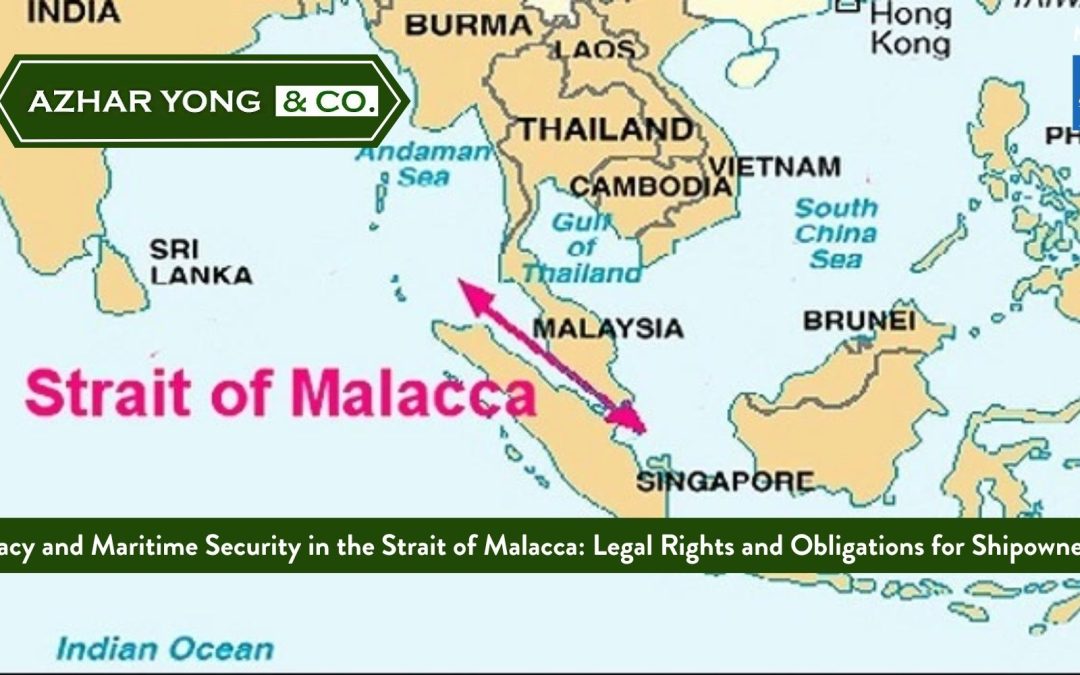
The Strait of Malacca — shared between Malaysia, Indonesia, and Singapore — was historically one of the world’s most dangerous waterways for piracy and armed robbery at sea. Coordinated multinational patrols under the Malacca Straits Patrol (MSP) framework, established in 2004 between Malaysia, Indonesia, Singapore, and Thailand, dramatically reduced the incidence of piracy through the 2010s. However, maritime crime in the region has not been eliminated: the IMB Piracy Reporting Centre, headquartered in Kuala Lumpur, continues to record incidents of petty theft, crew assaults, and vessel boarding in Malaysian waters.
Under Malaysian law, piracy is a criminal offence under the Merchant Shipping Ordinance 1952 and the Penal Code. The Malaysian Maritime Enforcement Agency (MMEA) — established in 2004 — is the primary enforcement body responsible for security, safety, and law enforcement in Malaysian maritime zones, including the Exclusive Economic Zone. The MMEA operates in coordination with the Royal Malaysian Navy, Marine Police, and the Marine Department.
For shipowners, the legal obligations arising from maritime security are defined primarily by international instruments: the International Ship and Port Facility Security (ISPS) Code, made mandatory under SOLAS Chapter XI-2, requires all vessels of 500 GT and above on international voyages to implement an approved Ship Security Plan (SSP). Failure to maintain an approved SSP is grounds for port state control detention in Malaysia and in every other SOLAS signatory state.
When an incident occurs — a vessel boarding, cargo theft, crew assault, or kidnapping — the legal consequences are immediate. The Master must report to the MMEA and the relevant Vessel Traffic Service; the P&I Club must be notified; evidence must be preserved; and — if crew members are harmed — MLC 2006 obligations to the crew and their families are triggered.
Legal Obligations for Shipowners Operating in Malaysian Waters
-
ISPS Code compliance: All vessels of 500 GT and above on international voyages must have an approved Ship Security Plan and a designated Company Security Officer. Non-compliance is a PSC detention ground.
-
Reporting obligations: Maritime crime incidents must be reported to the MMEA, the IMB Piracy Reporting Centre (Kuala Lumpur), and the relevant Vessel Traffic Service. Failure to report may affect insurance coverage.
-
Armed guards: The deployment of privately contracted armed security personnel (PCASP) on vessels transiting Malaysian waters is subject to Malaysian law and the IMO recommendations on PCASP. Prior notification to the MMEA and compliance with weapons licensing requirements are essential.
-
Crew welfare: Where crew members are injured, killed, or taken hostage during a maritime crime incident, MLC 2006 obligations — medical care, repatriation, death and disability compensation — are triggered immediately.
-
Insurance notification: P&I Clubs and hull insurers must be notified promptly of any incident. Late notification may prejudice coverage for crew welfare costs, cargo claims, and vessel damage.
Frequently Asked Questions: Piracy and Maritime Security in Malaysia
Q: What should the Master do immediately after a piracy or sea robbery incident in Malaysian waters?
A: The Master’s immediate obligations following a piracy or sea robbery incident are: ensure the safety of all crew and account for any missing or injured persons; activate the vessel’s security alert system (SSAS) if the vessel is under attack or immediate threat; report the incident to the MMEA operations centre (Pusat Operasi Agensi Penguatkuasaan Maritim Malaysia) and the relevant Vessel Traffic Service (VTS) immediately; report to the IMB Piracy Reporting Centre in Kuala Lumpur by telephone, fax, or email; preserve evidence — including CCTV footage, VDR data, bridge log entries, and photographs of damage and injuries; notify the P&I Club and hull insurer; and notify the owners and their maritime lawyer. Where crew members have been kidnapped, the shipowner should immediately contact the P&I Club’s crisis response team and a maritime security consultancy with hostage recovery expertise. Do not pay any ransom without coordinating with the P&I Club and legal counsel.
Q: Can I deploy armed guards on my vessel in Malaysian waters?
A: The deployment of privately contracted armed security personnel (PCASP) on vessels in Malaysian waters is a complex legal question governed by both Malaysian law and international guidelines. Under Malaysian law, the possession and use of firearms is strictly regulated by the Arms Act 1960 — there is no general exemption for PCASP. Vessels transiting Malaysian waters with armed guards on board must comply with Malaysian firearms licensing requirements, and failure to do so exposes the vessel, the Master, and the security personnel to criminal prosecution. In practice, most PCASP deployments in the Strait of Malacca are managed by transferring armed guards to and from a licensed floating armory outside Malaysian territorial waters, to avoid the vessel entering Malaysian jurisdiction with unlicensed weapons on board. Shipowners planning PCASP deployments should seek specific legal advice on compliance with Malaysian law before any deployment.
Q: Is piracy covered by my hull insurance and P&I cover?
A: Whether a maritime crime incident is covered by hull insurance and P&I depends on the nature of the incident and the specific policy terms. Standard hull policies on Institute Time Clauses terms typically cover piracy (defined as violent seizure of the vessel by persons from outside) as a marine peril — but may exclude sea robbery (theft without violence) or treat it as a separate risk requiring additional cover. The Institute War and Strikes clauses provide coverage for piracy where it is treated as a war-like act. P&I cover typically responds to crew injury, death, and kidnapping expenses under the crew section of the entry. Shipowners should review their hull and P&I coverage carefully to understand what is and is not covered for maritime crime incidents, and consider war risk and kidnap and ransom (K&R) cover where operating in higher-risk areas.
Q: Can I claim against the Malaysian government if its failure to provide adequate security contributed to a piracy incident?
A: This is a genuinely difficult legal question — and one that has not been definitively answered by the Malaysian courts in the piracy context. The general principle under Malaysian public law is that the government and its agencies (including the MMEA) are not liable for pure omissions — that is, for failing to take action to prevent third-party crime — unless a specific duty of care has been assumed towards the claimant and that duty has been breached. The mere fact that piracy occurred in Malaysian waters does not, by itself, give rise to a government liability claim. However, where the MMEA received specific intelligence of a threat to a particular vessel and failed to respond — or where maritime safety measures were being operated negligently — a more specific duty of care argument might be available. These cases are complex, unprecedented in Malaysia, and would face significant public interest and state immunity defences. A maritime lawyer can advise on the prospects of such a claim in a specific factual context.
Q: Several crew members were assaulted during a robbery. What legal rights do they have?
A: Crew members who are injured during a maritime crime incident have the same MLC 2006 rights as any seafarer injured in the course of their employment — including the right to medical treatment and hospitalisation at the shipowner’s expense, sick wages during recovery, and compensation for permanent disability or death in accordance with the Seafarer’s Employment Agreement and applicable CBA. In addition, where the assault was the result of the shipowner’s failure to implement adequate security measures — including a non-compliant Ship Security Plan, inadequate crew safety training, or failure to follow known security recommendations — the injured crew members may have a claim in negligence against the shipowner for the injuries suffered. The shipowner’s P&I Club will typically manage the welfare costs and any compensation claims, but crew members should seek independent legal advice to ensure they receive their full entitlements.
Offshore Vessel Disputes in Malaysia: What OSV Owners and Operators Need to Know
Malaysia's offshore oil and gas industry — anchored by PETRONAS and its production sharing contract (PSC) partners — is the largest single driver of demand for offshore support vessels (OSVs) in the country. Anchor handling tug supply vessels (AHTS), platform supply...

What Happens When a Shipyard Delays Delivery? Your Legal Rights in Malaysia
Delivery delays are the most common disputes in shipbuilding. When a yard fails to deliver a vessel by the contractual date — even accounting for permitted extensions — the buyer has clearly defined legal rights. The challenge is exercising them correctly, within the...
Shipbuilding Contracts in Malaysia: A Complete Legal Guide for Buyers and Shipyards
Malaysia has a significant and growing shipbuilding and ship repair industry. Major shipyards operate at Pulau Indah (Port Klang), Pasir Gudang (Johor), Penang, Labuan, and along the Sarawak coast — building offshore support vessels, tugs, barges, tankers, and...
US Tariffs and Malaysian Shipping in 2025: What Maritime Businesses Need to Know
The US tariff announcements of 2025 have created significant disruption to international trade flows — and Malaysian maritime businesses are directly in the crosshairs. Malaysia's export-driven economy, with major shipments of electronics, palm oil, rubber, LNG, and...
Court of Appeal Rules Vessel Arrest Invalid as Fuel Supply Did Not Qualify for Admiralty Jurisdiction
Meck Petroleum DMCC v International Bird Shipping Co. Inc. — Court of Appeal of Malaysia, Civil Appeal No. W-02(IM)(ADM)-1169-07/2024 A recent decision from the Court of Appeal of Malaysia offers a useful reminder for fuel suppliers, shipowners, and charterers alike:...
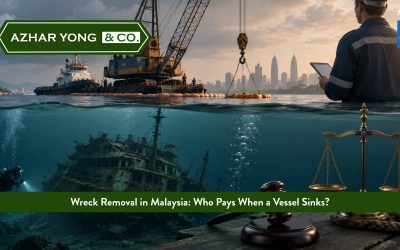
Wreck Removal in Malaysia: Who Pays When a Vessel Sinks?
When a vessel sinks, grounds, or is abandoned in Malaysian waters, the consequences extend far beyond the loss of the ship itself. A sunken wreck can obstruct navigation, damage port infrastructure, pollute the marine environment, and create a hazard for other vessels...