
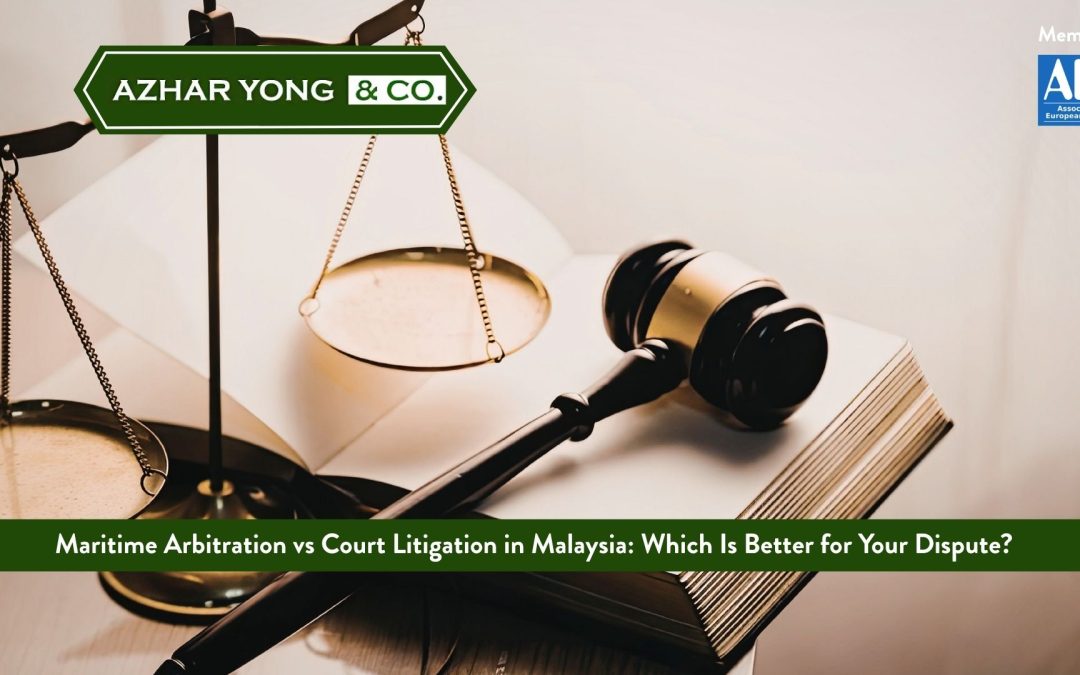
When a commercial conflict arises at sea, choosing the right forum for shipping dispute resolution in Malaysia is a strategic decision that can save millions in costs and months of delay. In Malaysia, claimants typically choose between the specialised Admiralty Court Malaysia or the increasingly popular route of maritime arbitration Malaysia.
The Case for the Admiralty Court
The Admiralty Court Malaysia, a dedicated division of the High Court in Kuala Lumpur, is designed for speed. It is the only forum with the power to issue a Warrant of Arrest, making it indispensable for securing claims against a vessel. Litigation is generally more cost-effective for smaller, domestic claims where a public judgment is desired. However, court proceedings are part of the public record, and you cannot choose your judge, although Malaysia’s Admiralty judges are highly regarded for their maritime expertise.
The Case for Maritime Arbitration
For international parties, maritime arbitration Malaysia (often conducted under AIAC Rules) is the gold standard. It offers total confidentiality and, crucially, allows the parties to appoint arbitrators with specific seafaring or technical backgrounds. Arbitration awards are also easier to enforce globally under the New York Convention. While the initial costs can be higher than court filing fees, the ability to tailor the timeline often leads to a faster shipping dispute resolution Malaysia outcome for complex charterparty or shipbuilding disputes.
Why Azhar Yong & Co is Your Strategic Partner
Deciding between the courtroom and the arbitral tribunal requires a deep understanding of both law and nautical reality. At Azhar Yong & Co, our unique edge is our Master Mariner expertise. We can assess the technical merits of your case to determine which forum will best appreciate the “on-board” evidence. Whether we are arresting a ship through the Admiralty Court Malaysia or arguing a complex collision case in maritime arbitration Malaysia, we ensure your legal strategy is anchored in technical truth.
Frequently Asked Questions (FAQ)
1. Can I switch from the Admiralty Court Malaysia to arbitration?
Only if both parties agree or if there is an existing arbitration clause in your contract (such as a Charterparty). A stay of proceedings can be requested to move the shipping dispute resolution Malaysia process to arbitration.
2. Which is faster: the Admiralty Court or maritime arbitration Malaysia?
The Admiralty Court Malaysia is exceptionally fast for arrests and interlocutory orders. However, for a final merit-based decision, maritime arbitration Malaysia can often be expedited if the parties agree on a “Fast Track” procedure.
3. Is maritime arbitration Malaysia legally binding?
Yes. An arbitral award has the same status as a court judgment and can be registered for enforcement through the High Court.
4. Do I need a Master Mariner for shipping dispute resolution Malaysia?
While not mandatory, having a lawyer with Master Mariner experience is a massive advantage in both forums, as they can translate complex navigational and technical data into winning legal arguments.
5. Are court proceedings in the Admiralty Court Malaysia confidential?
No. Court proceedings are generally open to the public. If confidentiality is a commercial priority, maritime arbitration Malaysia is the superior choice.
Would you like a comparative cost-benefit analysis based on the specific value of your current maritime claim?
Freight Forwarder Liability in Malaysia: When Things Go Wrong
Freight forwarders occupy a central but legally ambiguous position in modern supply chains. Depending on how the contract is structured, a freight forwarder may be acting purely as an agent — arranging transport on behalf of the cargo owner without assuming any...

Maritime Fraud in Malaysia: How to Protect Your Business and What to Do If You Are a Victim?
Maritime fraud encompasses a wide range of dishonest conduct — document forgery, cargo diversion, misrepresentation of vessel identity, fraudulent letters of indemnity, phantom shipments, and more. In Malaysia, maritime fraud is a criminal offence under the Penal Code...
Ship Repair Disputes in Malaysia: What Shipowners and Yards Need to Know
Malaysia's ship repair industry is substantial, with yards in Port Klang, Penang, Johor Bahru, Labuan, and Kuching handling routine dry-docking, emergency repairs, and major conversions for both domestic and international vessels. The ship repair relationship is...

Letters of Indemnity in Shipping: Risks and Legal Consequences in Malaysia
A Letter of Indemnity (LOI) in shipping is a document issued by the cargo receiver (or shipper) to the carrier, undertaking to indemnify the carrier against all losses, costs, and liabilities that may arise from releasing or delivering cargo in circumstances that...
Offshore Vessel Disputes in Malaysia: What OSV Owners and Operators Need to Know
Malaysia's offshore oil and gas industry — anchored by PETRONAS and its production sharing contract (PSC) partners — is the largest single driver of demand for offshore support vessels (OSVs) in the country. Anchor handling tug supply vessels (AHTS), platform supply...

What Happens When a Shipyard Delays Delivery? Your Legal Rights in Malaysia
Delivery delays are the most common disputes in shipbuilding. When a yard fails to deliver a vessel by the contractual date — even accounting for permitted extensions — the buyer has clearly defined legal rights. The challenge is exercising them correctly, within the...