
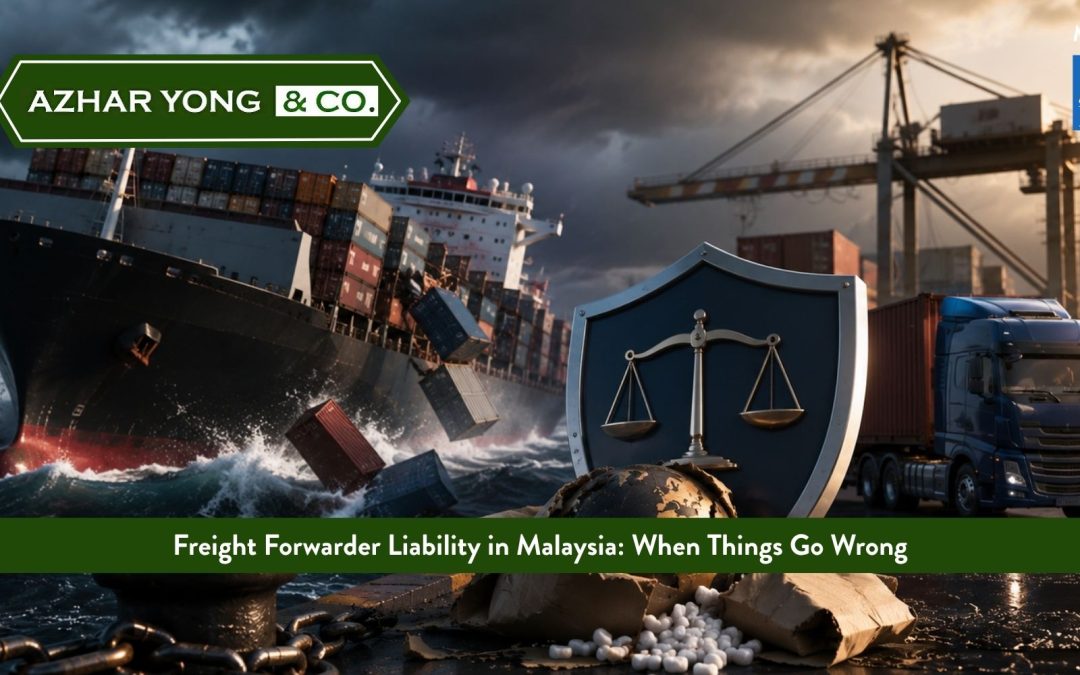
Freight forwarders occupy a central but legally ambiguous position in modern supply chains. Depending on how the contract is structured, a freight forwarder may be acting purely as an agent — arranging transport on behalf of the cargo owner without assuming any liability for the cargo itself — or as a principal carrier — issuing its own House Bill of Lading and assuming direct contractual responsibility for the cargo’s safe carriage.
This distinction matters enormously when a cargo claim arises. If the forwarder acted as an agent, the cargo owner’s claim lies against the actual carrier (the shipping line), not the forwarder. If the forwarder acted as a principal — by issuing an HBL and contracting directly with the cargo owner for carriage — the cargo owner can sue the forwarder directly for the loss, and the forwarder then has its own claim against the actual carrier.
In Malaysia, freight forwarding is not governed by a dedicated statute. Freight forwarders typically operate under standard trading conditions — the most common being the Standard Trading Conditions of the Malaysian Freight Forwarders Association (MFFA) or FIATA’s Standard Trading Conditions. These conditions almost universally contain liability limitation clauses that cap the forwarder’s exposure to a fixed sum per kilogram or per shipment — figures that are often a tiny fraction of the cargo’s commercial value.
However, these liability limitation clauses are not always enforceable. Under Malaysian contract law, a limitation clause must be properly incorporated into the contract — meaning the cargo owner must have been given notice of the clause before or at the time the contract was formed. A clause buried in a document provided after the contract was agreed, or printed in illegible small print, may not bind the cargo owner. Where the forwarder has acted fraudulently or with gross negligence, limitation clauses may also be unenforceable.
Key Issues in Malaysian Freight Forwarder Claims
-
Principal vs agent: Whether the forwarder issued its own HBL or simply arranged the MBL from the shipping line determines whether the claim lies against the forwarder or the shipping line directly.
-
Limitation clauses: MFFA standard conditions cap liability significantly. But incorporation and enforceability must be assessed — particularly for e-commerce or verbal bookings.
-
Time limits: MFFA conditions and FIATA conditions typically impose short time bars — some as short as nine months from delivery. Missing these bars extinguishes your claim.
-
Subcontractor liability: Forwarders often subcontract trucking, warehousing, and handling. Where a subcontractor causes the loss, the forwarder’s liability depends on the terms of its own contract with the subcontractor and with the cargo owner.
-
Customs and documentation: A forwarder who negligently misdeclares cargo, fails to arrange correct documentation, or misses customs deadlines may be liable for resulting delays, penalties, and storage costs.
Frequently Asked Questions: Freight Forwarder Liability in Malaysia
Q: My cargo was damaged, and the freight forwarder says its liability is limited to RM500. Is this enforceable?
A: Potentially — but not automatically. For a liability limitation clause in a freight forwarder’s standard terms to be binding under Malaysian law, it must have been properly incorporated into the contract at the time the contract was formed. If you were given the terms in writing before or at the time you booked the shipment, and you proceeded with the booking, the terms are likely incorporated. If the terms were only provided after the booking was confirmed, or were never drawn to your attention, they may not be binding. Additionally, where the damage was caused by the forwarder’s fraud or deliberate act, limitation clauses will generally not protect the forwarder — no party can rely on a contractual limitation to escape liability for its own fraudulent conduct. A maritime lawyer can assess whether the limitation clause was properly incorporated and whether any exception applies in your case.
Q: Should I sue the freight forwarder or the shipping line for my cargo loss?
A: The answer depends on which entity issued the bill of lading under which your cargo was shipped. If you received a House Bill of Lading (HBL) from the freight forwarder — with the forwarder named as the carrier — then the forwarder is your contractual carrier and your primary claim lies against it. The forwarder in turn has its own claim against the ocean carrier (the shipping line) under the Master Bill of Lading. If you received a Master Bill of Lading directly from the ocean carrier, your claim lies against the shipping line directly. In some cases — particularly where the cargo was lost in a warehouse or during road transport arranged by the forwarder — it may be appropriate to bring claims against both the forwarder and the subcontractor simultaneously. A maritime lawyer can map out the chain of contracts and identify the most effective target for your claim.
Q: The freight forwarder lost my cargo in their warehouse. Who is liable?
A: Where cargo is lost or damaged while in the freight forwarder’s warehouse — as opposed to during sea carriage — the legal framework shifts from maritime law to general contract law and bailment. A freight forwarder holding cargo in its warehouse is a bailee for reward, and owes a duty to take reasonable care of the cargo. If the loss results from the forwarder’s failure to maintain adequate security, fire prevention, or climate control, the forwarder is liable in negligence as bailee. The standard trading conditions may attempt to limit liability for warehouse damage — but again, incorporation and reasonableness must be assessed. Where the forwarder subcontracted the warehousing to a third party, the cargo owner may have a direct claim against the warehouse operator as well as against the forwarder. Note that cargo insurance typically covers storage as part of the voyage — notify your insurer promptly.
Q: The freight forwarder wrongly declared my cargo, causing it to be seized by customs. Can I recover my losses?
A: Yes — a freight forwarder who negligently or incorrectly declares cargo to Malaysian Customs (Royal Malaysian Customs Department — RMCD) is liable for the losses that flow from that misdeclaration. Where the misdeclaration leads to cargo seizure, customs investigation, fines, or mandatory destruction of the goods, the cargo owner can pursue the forwarder for those losses as damages for negligence. If the misdeclaration was deliberate — for example, to undervalue the goods and reduce import duty — the forwarder may face criminal liability under the Customs Act 1967, and the cargo owner may also have a civil claim for conspiracy. The cargo owner should document all losses carefully — including the value of seized goods, customs fines, storage charges, and any business losses caused by the non-delivery — and seek legal advice promptly, as customs disputes often involve separate administrative proceedings that run in parallel with any civil claim.
Q: Is there any way to protect myself from freight forwarder liability caps?
A: Yes — and the most effective protection is cargo insurance. A comprehensive marine cargo insurance policy from a reputable insurer covers physical loss or damage to your goods during transit — including the warehouse-to-warehouse risk — at their full commercial value, regardless of what the freight forwarder’s or carrier’s liability cap might be. The insurer then pursues the forwarder or carrier in a subrogated claim on your behalf. If cargo insurance is not possible, you can ask the freight forwarder to declare a higher value on the HBL and pay an ad valorem freight surcharge — this raises the contractual liability cap to the declared value. Finally, negotiating the forwarder’s standard terms before placing regular, high-value shipments — particularly to include a higher per-kilo or per-shipment liability cap — is worth considering for ongoing commercial relationships.
Ship Recycling in Malaysia: Legal Framework and What Shipowners Need to Know
Ship recycling — the dismantling and scrapping of end-of-life vessels — is a significant industry in the Asia-Pacific region. In Malaysia, ship breaking and recycling activities are conducted at yards in Pulau Indah (Port Klang), Pasir Gudang (Johor), and along the...
Maritime Liens in Malaysia: Priority Claims Against Vessels and How to Enforce Them
A maritime lien is a privileged security interest that arises automatically by operation of law against a vessel when certain defined claims are incurred. Unlike a registered ship mortgage — which requires formal registration to be effective — a maritime lien arises...
Manning Agency Liability in Malaysia: What Shipowners and Seafarers Need to Know
Malaysia is one of Southeast Asia's most active seafarer supply markets, with thousands of licensed manning agencies operating under the oversight of the Marine Department of Malaysia (Jabatan Laut) and the Department of Labour. Manning agencies — also known as crew...
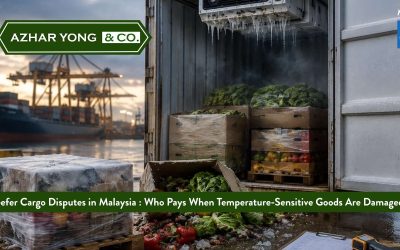
Reefer Cargo Disputes in Malaysia: Who Pays When Temperature-Sensitive Goods Are Damaged?
Malaysia is a major exporter of temperature-sensitive goods — including palm oil products, pharmaceutical ingredients, fresh tropical produce, rubber products, and frozen seafood — and a significant importer of cold chain goods including dairy, meat, vaccines, and...
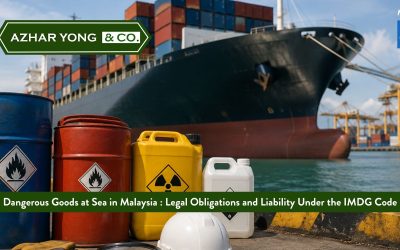
Dangerous Goods at Sea in Malaysia: Legal Obligations and Liability Under the IMDG Code
Malaysia is a major hub for the regional chemical and petrochemical trade, with significant volumes of Class 3 flammable liquids, Class 2 compressed gases, Class 6 toxic substances, and Class 9 miscellaneous dangerous goods moving through Port Klang and other ports...
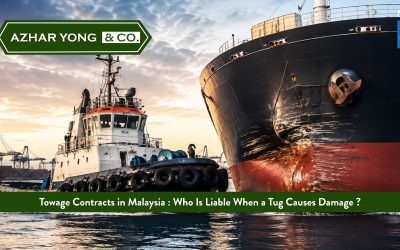
Towage Contracts in Malaysia: Who Is Liable When a Tug Causes Damage?
Towage is the service of using one vessel (the tug) to move, guide, or assist another vessel (the tow). In Malaysian ports, towage services are provided by licensed tug operators — including Bumi Armada, Maju Maritime, and port authority-operated tugs — and are a...