
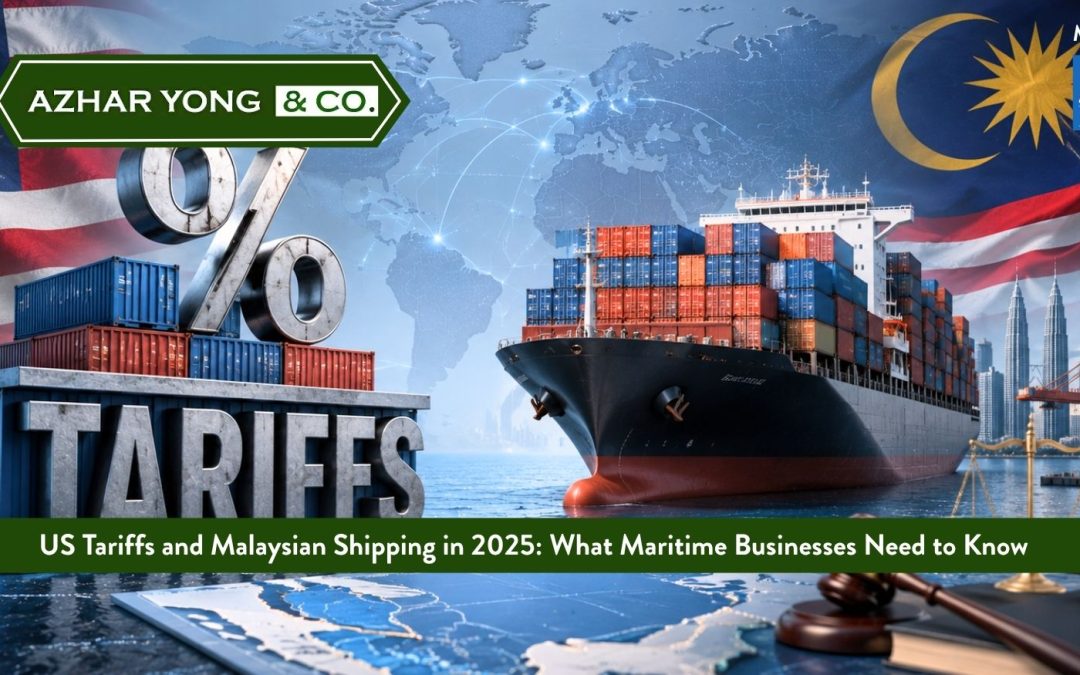
The US tariff announcements of 2025 have created significant disruption to international trade flows — and Malaysian maritime businesses are directly in the crosshairs. Malaysia’s export-driven economy, with major shipments of electronics, palm oil, rubber, LNG, and manufactured goods to the United States, makes it particularly exposed to tariff-driven trade contraction. At the same time, the US has imposed a dramatic fee increase on Chinese-owned, operated, or flagged vessels calling at US ports — a measure that is reshaping cargo routing decisions across Asia, including through Malaysian transhipment hubs.
For Malaysian shipowners, the direct impact of Chinese vessel fees is significant. Vessels that are Chinese-owned or operated face port fees of up to USD 1 million per US port call under the proposed US Trade Representative (USTR) measures — creating strong commercial incentives for cargo owners to shift to non-Chinese tonnage. This is generating new chartering demand for Malaysian and other non-Chinese flag vessels, but also creating legal complexity around charterparty performance obligations where previously agreed vessel nominations become commercially unworkable.
For exporters and freight forwarders, the tariff environment is affecting cargo volumes, freight rates, and shipping schedules in ways that can trigger charterparty and bill of lading disputes. Where cargo is delayed, cancelled, or diverted due to tariff uncertainty, questions arise about who bears the additional cost — the shipper, the carrier, or the freight forwarder — and what contract terms govern the allocation of that risk.
Malaysian maritime businesses should review their shipping contracts carefully, understand their force majeure provisions, and take legal advice on how the current tariff environment affects their existing obligations and future contracting strategy.
Key Legal Issues for Malaysian Maritime Businesses in the Tariff Environment
-
Force majeure and frustration: Where US tariffs make a shipping contract commercially impossible or fundamentally different from what was agreed, parties may have arguments based on force majeure clauses or the doctrine of frustration — but these are narrow doctrines and will rarely excuse non-performance outright.
-
Chinese vessel fee impact on charterparties: Where a time charter specifies a particular vessel, and that vessel is subject to prohibitive US port fees, the charterer may have arguments that the vessel is no longer fit for the intended service — triggering off-hire or repudiation rights depending on the charter terms.
-
Cargo insurance implications: Where cargo is diverted from its contracted destination due to tariff changes, cargo insurance coverage may need to be reviewed — policies may not automatically cover the amended voyage.
-
Transhipment hub impact: Port Klang and Port of Tanjung Pelepas are major transhipment hubs for US-bound cargo. Changes in US tariff policy directly affect transhipment volumes and the commercial viability of Malaysian hub port business models.
-
Contract review and future-proofing: Malaysian shipping businesses entering new contracts should consider whether tariff escalation clauses, trade policy change provisions, or enhanced force majeure drafting are appropriate to manage ongoing uncertainty.
Frequently Asked Questions:
Q: Can a Malaysian exporter cancel a shipping contract because of US tariffs?
A: Not easily — and not without legal risk. A contract of carriage (bill of lading or charterparty) is a binding commercial agreement, and the imposition of US tariffs — however commercially damaging — does not automatically excuse a party from performance. The doctrine of frustration under Malaysian contract law (Contracts Act 1950, Section 57) provides that a contract is discharged where performance has become impossible due to an event that was not foreseen at the time of contracting and is not the fault of either party. However, frustration requires that the change of circumstances makes the contract radically different from what was agreed — not merely more expensive or less profitable. Tariff changes that increase costs significantly but do not make performance truly impossible are unlikely to qualify. A maritime lawyer can assess the specific facts and advise on whether frustration or a contractual force majeure clause provides any relief.
Q: How do US fees on Chinese vessels affect Malaysian shipping companies?
A: The US fees on Chinese-owned or operated vessels — proposed by the USTR in 2025 — are structured to apply to vessels that are Chinese-built, Chinese-flagged, or operated by Chinese shipping companies, per US port call. The fees are substantial: up to USD 1 million per call in some categories. For Malaysian shipping companies operating non-Chinese tonnage, this creates a competitive opportunity — cargo owners seeking to avoid Chinese vessel fees may prefer Malaysian or other non-Chinese flag tonnage for their US-bound cargoes. For Malaysian companies that have chartered Chinese-owned vessels for US trades, there is potential legal complexity: if the vessel becomes subject to fees that were not anticipated when the charter was agreed, who bears the cost? The answer depends on the charter terms — particularly the freight rate structure, the allocation of port expenses, and any applicable tariff or regulatory change clauses.
Q: What force majeure rights do Malaysian shipping businesses have in the current environment?
A: Force majeure rights depend entirely on the specific contract. Most commercial shipping contracts — charterparties, freight contracts, logistics agreements — contain a force majeure clause that lists the events which excuse performance. Whether US tariffs or Chinese vessel fees qualify as force majeure events depends on how the clause is drafted: some clauses cover ‘government action’ or ‘regulatory change’ broadly; others list specific events narrowly. In most standard shipping contracts, commercial disruption caused by tariffs — as opposed to a physical impossibility of performance — would not constitute a force majeure event. However, where specific government actions (such as an embargo or a prohibition on certain vessel types) make performance literally impossible, a stronger force majeure argument may be available. A maritime lawyer can review your specific contracts and advise on available relief.
Q: How are Malaysian transhipment hubs affected by the US tariff environment?
A: Port Klang and Port of Tanjung Pelepas (PTP) are two of the world’s busiest transhipment hubs, handling enormous volumes of cargo destined for or originating from the United States. The US tariff environment affects Malaysian transhipment in several ways. First, reduced US-bound cargo volumes from tariff-affected exporters (particularly in electronics and manufactured goods) may reduce total throughput. Second, cargo diversion — where exporters seek alternative markets or alternative routing to minimise US tariff exposure — may shift transhipment patterns. Third, the fee structure targeting Chinese-operated vessels may prompt shipping lines to restructure their Asia-to-US service configurations, changing which vessels call at Malaysian ports. For port operators and logistics businesses relying on transhipment volumes, the tariff environment creates material business planning uncertainty — and potentially legal disputes with tenants or service partners whose volume commitments change.
Q: Should Malaysian shipping contracts be updated to address tariff risk?
A: Yes — and now is the right time to do so. Businesses entering into new shipping contracts should consider several drafting improvements in light of the current tariff environment. First, force majeure clauses should be reviewed and updated to ensure they clearly address government-imposed tariffs, sanctions, and trade restrictions — not just physical force majeure events like storms or fires. Second, escalation clauses — providing a mechanism for adjusting freight rates or contract terms if tariffs change the economics of a route significantly — can provide a structured way to manage disputes without requiring full termination. Third, governing law and dispute resolution clauses should be carefully chosen — contracts that may involve US, Chinese, and Malaysian parties need clear dispute resolution provisions that work across all relevant jurisdictions. A maritime lawyer can review existing contracts and advise on appropriate future-proofing measures.
Maritime Cyber Security in Malaysia: IMO Requirements and Legal Liability for Shipowners
A ransomware attack locks your vessel's bridge navigation systems at sea. A phishing email compromises your cargo booking platform. A GPS spoofing attack sends your vessel off course in the Strait of Malacca. Maritime cyber attacks are no longer hypothetical — they...
Malaysia’s Merchant Shipping Ordinance 2026: Key Changes Every Shipowner Must Know
The Merchant Shipping Ordinance 1952 (MSO 1952) has been the bedrock of Malaysian maritime law for over 70 years. It governs vessel registration, seafarer employment, casualty investigation, limitation of liability, port operations, and a vast range of other maritime...
Container Loss at Sea: Legal Rights When Your Cargo Goes Overboard in Malaysian Waters
Container loss overboard — where containers are lost from a vessel's deck during heavy weather or vessel instability — is a significant and growing problem in international shipping. High-profile incidents, including the loss of hundreds of containers from major...
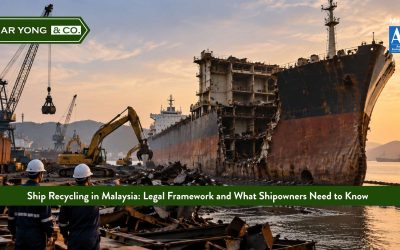
Ship Recycling in Malaysia: Legal Framework and What Shipowners Need to Know
Ship recycling — the dismantling and scrapping of end-of-life vessels — is a significant industry in the Asia-Pacific region. In Malaysia, ship breaking and recycling activities are conducted at yards in Pulau Indah (Port Klang), Pasir Gudang (Johor), and along the...
Maritime Liens in Malaysia: Priority Claims Against Vessels and How to Enforce Them
A maritime lien is a privileged security interest that arises automatically by operation of law against a vessel when certain defined claims are incurred. Unlike a registered ship mortgage — which requires formal registration to be effective — a maritime lien arises...
Manning Agency Liability in Malaysia: What Shipowners and Seafarers Need to Know
Malaysia is one of Southeast Asia's most active seafarer supply markets, with thousands of licensed manning agencies operating under the oversight of the Marine Department of Malaysia (Jabatan Laut) and the Department of Labour. Manning agencies — also known as crew...