
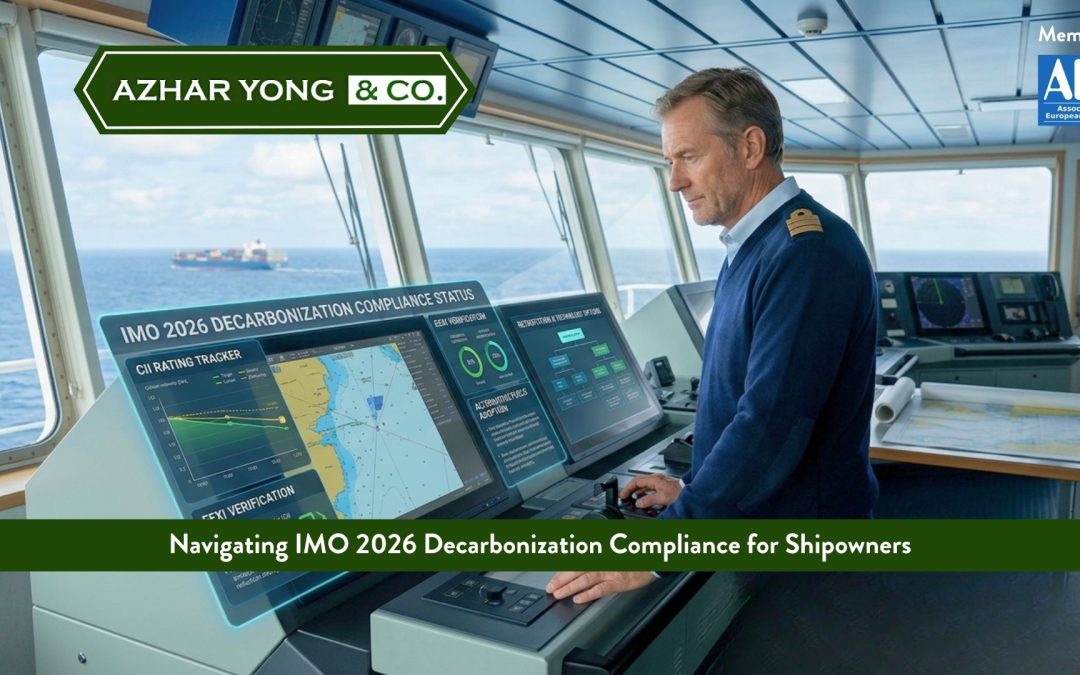
The maritime industry currently faces a transformative era as global regulators tighten environmental standards. For vessel operators in Southeast Asia, achieving IMO 2026 decarbonization compliance for shipowners is no longer a future goal but an immediate operational requirement. As the International Maritime Organisation (IMO) advances its Net-Zero Framework, staying ahead of these shifting laws protects your fleet from heavy penalties and port detentions.
Enhanced Mandatory Data Collection
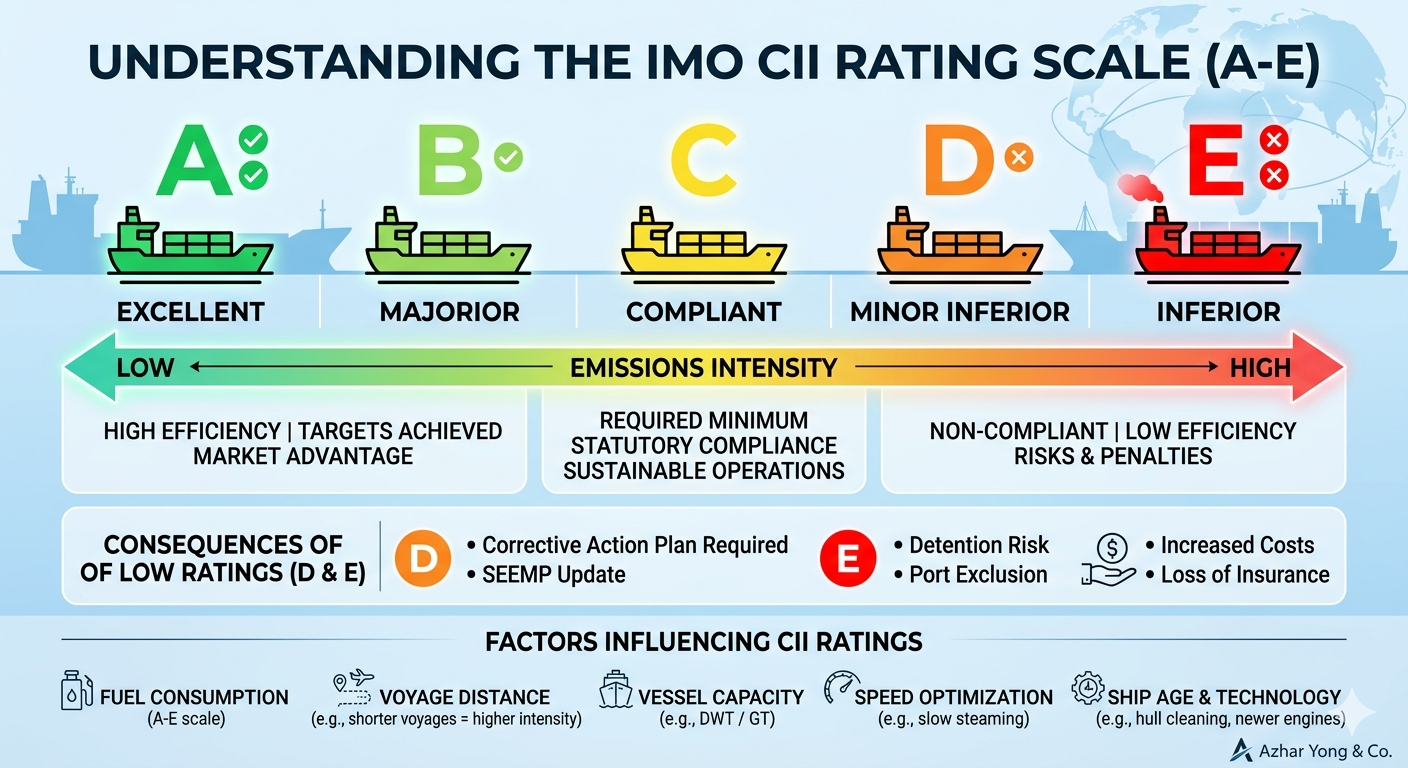
Starting 1 January 2026, the IMO Data Collection System (DCS) enters a new phase of granularity. All ships with a gross tonnage of 5,000 tons or more must report more detailed fuel consumption data, specifically categorising usage by consumer type and operational status. To ensure IMO 2026 decarbonization compliance for shipowners, you must update your Ship Energy Efficiency Management Plan (SEEMP) Part II. This enhanced reporting allows regulators to monitor Carbon Intensity Indicator (CII) ratings more accurately, directly impacting your vessel’s commercial viability in Malaysian and international waters.
Approaches to Carbon Intensity Improvement
Owners of vessels with low CII ratings must implement corrective actions to maintain compliance with IMO 2026 decarbonization requirements. These strategies often include hull cleaning to reduce friction, installing wind-assisted propulsion, or transitioning to low-carbon fuels like LNG and methanol. If your vessel fails to meet the required efficiency standards, you may face a limitation of liability for maritime claims in Malaysia if operational disruptions occur due to regulatory non-compliance. Our legal team assists owners in reviewing shipbuilding and charterparty contracts to ensure they account for these technical retrofits.
Consequences of Global Emission Control Areas
In March 2026, new Nitrogen Oxide (NOx) Emission Control Areas (ECAs) will come into force in regions like the Norwegian Sea and Canadian Arctic. While these are geographically distant, they set the precedent for future regional standards in the Asia-Pacific. Maintaining IMO 2026 decarbonization compliance for shipowners requires a global perspective, as Malaysian vessels trading internationally must comply with these Tier III standards. Proactive legal and technical planning ensures that your fleet remains flexible and ready for the 2030 goal of a 20% reduction in total greenhouse gas emissions.
Why Choose Azhar Yong & Co for Environmental Compliance?
Navigating the complexities of MARPOL and IMO regulations requires a legal partner who understands the technical realities of modern seafaring. At Azhar Yong & Co, our team includes a Master Mariner with the technical expertise to interpret engine performance data and emission reports. We provide a unique advantage by bridging the gap between engineering requirements and legal obligations. By choosing our firm, you ensure that your strategy for IMO 2026 decarbonization compliance for shipowners is both legally sound and operationally feasible, protecting your business from the risks of a rapidly decarbonising industry.
FAQs
What is the final deadline to ensure IMO 2026 decarbonisation compliance for shipowners regarding fuel data?
Shipowners must have their updated data collection systems in place by 1 January 2026 to comply with the revised MARPOL Annex VI requirements for granular reporting.
Which vessel sizes are most affected by IMO 2026 decarbonisation compliance for shipowners?
While the IMO’s overall greenhouse gas strategy applies broadly, the mandatory enhanced data collection for IMO 2026 decarbonisation compliance for shipowners specifically targets ships of 5,000 gross tonnage and above.
How do CII ratings determine my status for IMO 2026 decarbonisation compliance for shipowners?
Under the framework for IMO 2026 decarbonisation compliance for shipowners, vessels must maintain a rating of C or higher. If a ship is rated D or E for three consecutive years, it is considered non-compliant until a corrective action plan is implemented.
Can a maritime lawyer assist with IMO 2026 decarbonisation compliance for shipowners?
Yes. Expert solicitors help draft “Green Clauses” in charterparties to allocate responsibility for fuel costs and carbon intensity, which is a critical part of maintaining IMO 2026 decarbonisation compliance for shipowners.
What are the legal risks of failing to meet IMO 2026 decarbonisation compliance for shipowners?
Failing to achieve IMO 2026 decarbonisation compliance for shipowners can lead to vessel detentions by Port State Control, loss of P&I insurance cover, and significant difficulties when invoking a limitation of liability for maritime claims in Malaysia.