
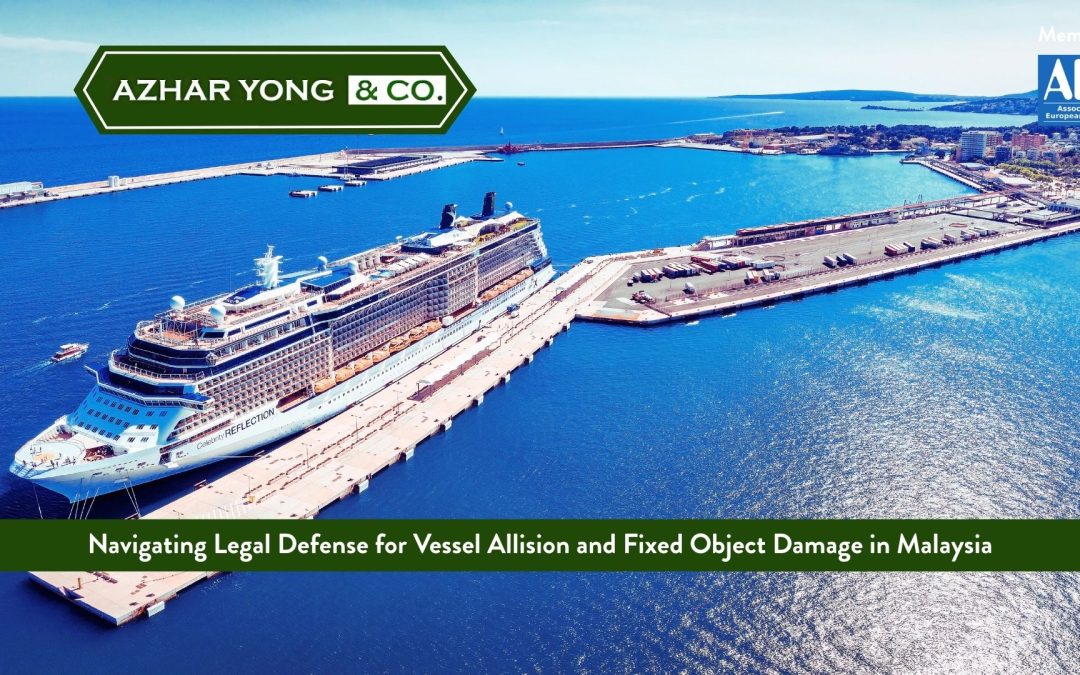
In the busy waterways of Port Klang and the Port of Tanjung Pelepas, the margin for error is razor-thin. When a ship strikes a stationary structure—a specialised maritime incident known as an allision—the shipowner faces immediate and aggressive claims from port authorities. Securing a robust legal defence for vessel allision and fixed object damage in Malaysia is vital to prevent the arrest of your vessel and the inflation of repair claims by terminal operators.
Determining Liability and the Oregon Rule
Under maritime law, a rebuttable presumption often exists that the moving vessel is at fault when it strikes a fixed object. However, an effective legal defence for vessel allision and fixed object damage in Malaysia can challenge this presumption. Our team investigates whether the fixed object was properly lit, whether the wharf was structurally sound, or if compulsory pilotage errors contributed to the incident. By analysing the VDR (Voyage Data Recorder) data and technical logs, we help owners shift or apportion liability rather than accepting 100% of the blame.
Managing Claims for Port Infrastructure Damage
[Image: A container ship navigating closely to a port crane and quay wall] Terminal operators often demand massive security amounts for damage to “Fixed and Floating Objects” (FFO). Without an expert legal defence for vessel allision and fixed object damage in Malaysia, you may find yourself providing security that far exceeds the actual cost of repairs. We assist clients in appointing independent surveyors to verify the extent of the damage. Furthermore, we leverage the limitation of liability for maritime claims in Malaysia to ensure that even in cases of significant infrastructure damage, the financial exposure of the shipowner remains within the statutory limits provided by the Merchant Shipping Ordinance.
Why Choose Azhar Yong & Co for Your Maritime Defence
When a crisis occurs at sea, you need more than just a lawyer; you need a strategist who understands the engine room as well as the courtroom. Azhar Yong & Co stands out as the premier choice because our team features a Master Mariner with over three decades of global command experience. This technical edge allows us to dismantle flawed technical arguments from port engineers that standard law firms might miss. By choosing Azhar Yong & Co, you gain a partner that provides a rapid, 24/7 legal defence for vessel allision and fixed object damage in Malaysia, ensuring that your legal strategy is grounded in real-world seafaring expertise. We don’t just read the law; we have lived the life at sea, making us the most capable firm to protect your assets and reputation.
FAQs
What is the difference between collision and allision in Malaysian law?
An allision occurs when a vessel strikes a stationary object, such as a bridge or quay. You need a specialised legal defence for vessel allision and fixed object damage in Malaysia because the burden of proof often starts against the shipowner.
Can I limit my financial exposure after hitting a port crane?
Yes. Even for allisions, shipowners can often invoke the limitation of liability for maritime claims in Malaysia. This caps your total payout based on the vessel’s tonnage, provided the damage wasn’t caused by your personal act or omission.
Does the port have the right to arrest my ship after an allision?
Yes, port authorities can apply for a warrant of arrest to secure their claim for repairs. An early legal defence for vessel allision and fixed object damage in Malaysia can prevent an arrest by offering a bank guarantee or P&I LOU before the court acts.
How does a Master Mariner help in an allision defense?
An allision often involves technical questions about wind, tide, and engine response. A lawyer with Master Mariner experience can better evaluate if the incident was an “inevitable accident,” which is a key component of a legal defence for vessel allision and fixed object damage in Malaysia.
What should I do immediately after an allision in a Malaysian port?
Notify your P&I Club and engage a maritime lawyer to preserve evidence. A swift legal defence for vessel allision and fixed object damage in Malaysia starts with capturing VDR data and witness statements before the crew is debriefed by port investigators.