
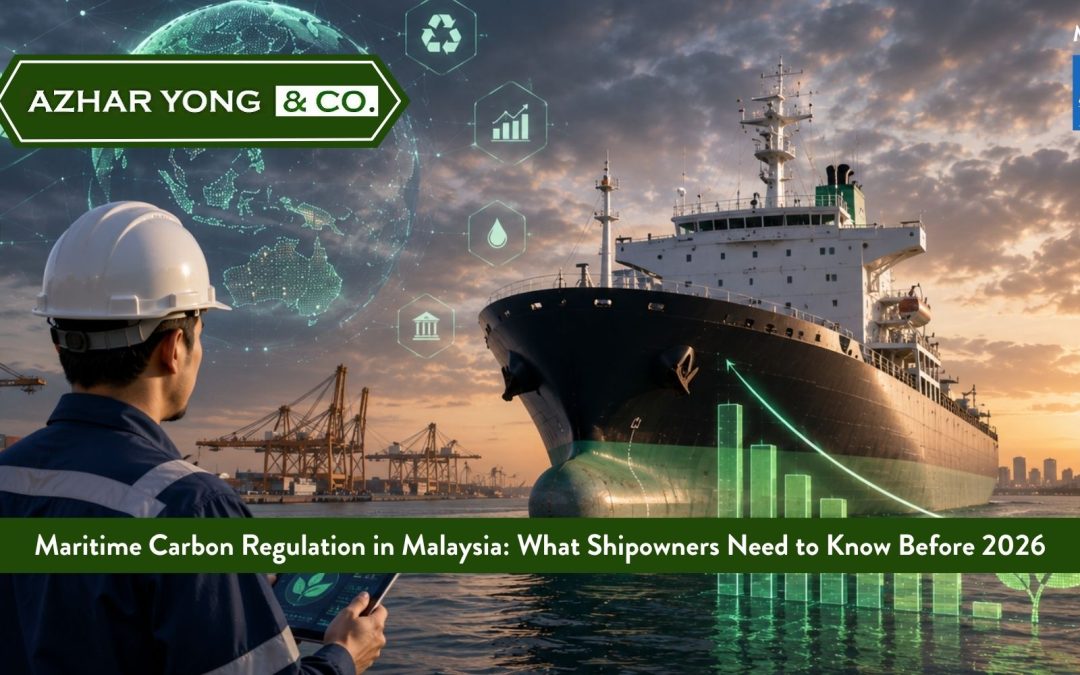
Malaysia’s maritime sector is entering a period of significant regulatory change. The Malaysian government has announced that a carbon tax will be introduced beginning in 2026, targeting energy-intensive sectors — including shipping and port operations. Simultaneously, Parliament passed the Carbon Capture, Utilisation and Storage Act 2025 (CCUS Act 2025) in March 2025, establishing Malaysia’s first comprehensive statutory framework for carbon capture, transportation, and permanent storage.
At the international level, the International Maritime Organisation (IMO) has adopted its 2023 IMO Strategy on Reduction of GHG Emissions from Ships, which sets binding targets for the shipping industry: net-zero greenhouse gas emissions by or around 2050, with a 20% reduction by 2030 and a 70% reduction by 2040 compared to 2008 levels. Malaysia, as an IMO member state, is bound by these targets and is actively aligning domestic regulation with the international framework.
For shipowners and operators, the practical implications are already beginning to crystallise. The EU Emissions Trading System (EU ETS) — which requires shipping companies to surrender carbon allowances for voyages to, from, and between EU ports — has been in force since January 2024 and directly affects Malaysian shipping companies with EU trading routes. The IMO’s Carbon Intensity Indicator (CII) rating system, in force since January 2023, assigns annual operational carbon ratings to vessels of 5,000 GT and above — with poor ratings triggering corrective action plans and, ultimately, potential trading restrictions.
The intersection of the CCUS Act 2025 with maritime operations raises novel liability questions: if carbon dioxide is transported by sea and escapes during transit, the legal framework for liability — whether admiralty, environmental, or CCUS statutory — remains to be tested in the Malaysian courts. Marine insurance programmes are also being re-evaluated to ensure they cover emerging carbon-related risks.
Key Carbon Regulation Issues for Malaysian Shipowners
-
IMO CII ratings: Vessels of 5,000 GT and above must comply with annual CII operational carbon intensity requirements. Poor ratings (D or E for three consecutive years) require an approved corrective action plan — and may ultimately affect a vessel’s ability to trade.
-
EU ETS compliance: Malaysian shipping companies with EU trading routes must purchase and surrender EU Emission Allowances (EUAs) for covered voyages. From 2026, 100% of emissions from EU-to-EU voyages and 50% of emissions from EU-to-non-EU voyages are covered.
-
Malaysia carbon tax (from 2026): The domestic carbon tax will apply to energy-intensive sectors. The precise scope of application to shipping operations — port activities, domestic voyages, bunker purchases — is to be confirmed by implementing regulations.
-
CCUS Act 2025 — maritime interface: Vessels transporting captured carbon dioxide for offshore storage may face novel liability exposure if leakage occurs during maritime carriage. The applicable legal framework involves admiralty jurisdiction, CCUS statutory liability, and environmental regulation simultaneously.
-
Marine insurance gap: Standard P&I and hull policies may not cover emerging carbon-related liabilities. Shipowners should review their coverage with their P&I Club and hull insurer to identify potential gaps.
Frequently Asked Questions: Port State Control in Malaysia
Q: Does the IMO CII rating affect my vessel’s ability to trade in Malaysian waters?
A: The CII rating system applies to vessels of 5,000 GT and above engaged in international voyages. A vessel rated A or B is performing better than required; C is the minimum compliant level. Vessels rated D for three consecutive years, or E for a single year, must submit an approved Ship Energy Efficiency Management Plan (SEEMP) with corrective measures. Currently, the CII system does not carry direct trading restrictions in Malaysian waters — the enforcement mechanism is flag state control through the flag state administration, not port state control. However, as the IMO framework develops toward 2030 and 2050 targets, it is likely that CII ratings will increasingly influence port access, insurance pricing, charterparty terms, and financing availability. Shipowners should treat CII compliance as a strategic priority, not merely a regulatory box-ticking exercise.
Q: Does the EU ETS apply to Malaysian shipping companies?
A: Yes — if the Malaysian shipping company operates vessels of 5,000 GT or above on voyages to, from, or between EU ports, the EU ETS applies regardless of the company’s nationality or the vessel’s flag. From 2024, 40% of emissions from covered voyages were subject to ETS; from 2025, 70%; and from 2026, 100%. The shipping company named as the ‘shipping company’ in the vessel’s Document of Compliance (DOC) is responsible for compliance, which may be the shipowner, the bareboat charterer, or the ISM manager, depending on the vessel’s management structure. Malaysian companies with EU trading routes should ensure they have a verified emissions monitoring plan in place and a sufficient allocation of EU Emission Allowances to meet their surrender obligations.
Q: What does the CCUS Act 2025 mean for vessels transporting CO2 in Malaysian waters?
A: The CCUS Act 2025 establishes Malaysia’s regulatory framework for the capture, transportation, and geological storage of carbon dioxide. For the maritime sector, the most significant implication arises where vessels are engaged in the transportation of captured CO2 by sea to offshore storage sites. The Act creates a statutory licensing regime and imposes liability for CO2 leakage or escape. The critical legal question — not yet resolved — is how liability is allocated between the CCUS statutory regime and admiralty law where a leakage incident occurs during maritime transit. Is it a cargo claim? An environmental claim? A CCUS statutory claim? All three simultaneously? Maritime insurance programmes will need to be assessed for coverage of this risk, and contractual indemnity provisions in CO2 transportation contracts will need careful drafting. This is an emerging area requiring specialist legal advice.
Q: How will Malaysia’s 2026 carbon tax affect shipping and port operations?
A: The detailed scope of Malaysia’s carbon tax — which sectors are covered, at what rate, and through what mechanism — is to be set out in implementing legislation expected before 2026. Based on government announcements, the tax is intended to target large emitters in energy-intensive industries. Port operations, bunkering activities, and potentially domestic shipping may fall within scope. Shipowners should monitor the legislative development closely and engage with their local counsel and industry associations to understand the compliance requirements as they crystallise. It is also worth noting that carbon pricing may influence bunker purchasing decisions and routing strategies — providing an economic incentive to reduce emissions ahead of the formal regulatory deadline.
Q: Should I review my P&I and hull insurance for carbon-related risks?
A: Yes — and many shipowners and their P&I Clubs are already doing so. Standard P&I and hull and machinery policies were not designed with carbon regulation in mind, and there are potential gaps in coverage for: fines and penalties arising from EU ETS non-compliance; carbon-related liabilities under the CCUS Act 2025; CII-related trading restrictions that prevent a vessel from fulfilling a charterparty; and novel environmental liabilities arising from CO2 transportation incidents. Shipowners should discuss these risks explicitly with their P&I Club correspondent and hull insurer, and consider whether specialist environmental liability coverage is appropriate for their trading area and cargo type. A maritime lawyer can advise on the contractual and regulatory dimensions of carbon risk management as Malaysian law develops.
Bunker Disputes in Malaysia: What to Do When Fuel Quality or Quantity Is Disputed
Malaysia is a significant bunkering market, with licensed suppliers operating across 19 ports, including Port Klang, Port of Tanjung Pelepas, Pasir Gudang, Penang, and Labuan. Vessels transiting the Strait of Malacca regularly bunker in Malaysian waters, and where...
Ship Collision Claims in Malaysia: Who Is Liable and How Do You Claim?
Malaysia's position along the Strait of Malacca — one of the world's busiest and most congested shipping lanes — means that ship collisions are a real and recurring risk. When two vessels collide, the legal consequences are immediate and potentially enormous: hull...
Ship Mortgage Enforcement in Malaysia: What Lenders and Shipowners Need to Know
A ship mortgage is a security interest granted by a shipowner over a vessel in favour of a lender as collateral for a loan or financing facility. It functions similarly to a property mortgage — the shipowner retains possession and continues operating the vessel....
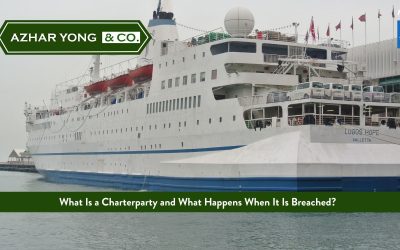
What Is a Charterparty and What Happens When It Is Breached?
A charterparty is a written contract between a shipowner and a charterer for the use of a vessel. It is the governing document for the commercial relationship: it sets out the hire rate or freight payable, the duration or voyage to be performed, the obligations of...
Charterparty Disputes in Malaysia: A Complete Guide for Shipowners and Charterers
A charterparty is one of the most commercially significant contracts in the shipping industry. When disputes arise under it — over unpaid freight, demurrage, off-hire, or vessel performance — the financial consequences can be enormous. This guide explains how...
Maritime Arbitration vs Court Litigation in Malaysia: Which Is Better for Your Dispute?
When a commercial conflict arises at sea, choosing the right forum for shipping dispute resolution in Malaysia is a strategic decision that can save millions in costs and months of delay. In Malaysia, claimants typically choose between the specialised Admiralty Court...